...

APT Series Automatic Trap Pump

APT Automatic Trap Pump

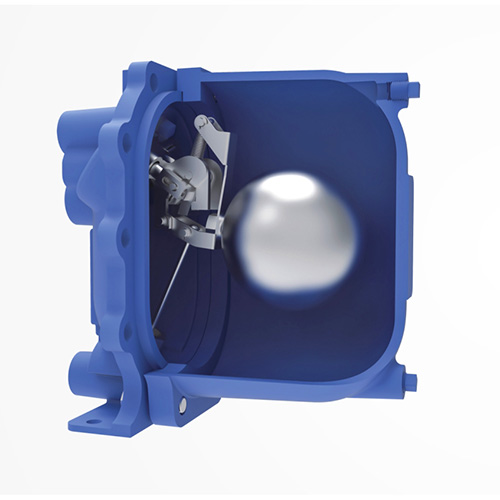
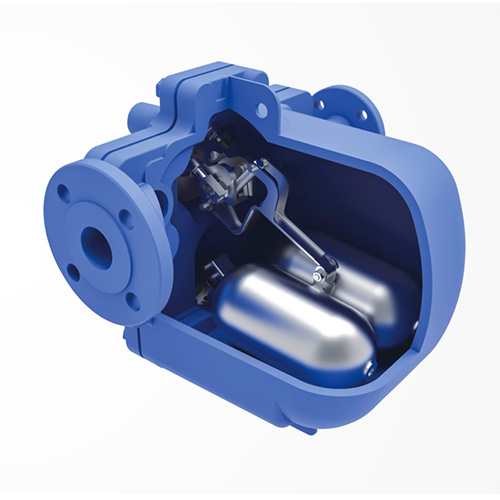
Based on the float trap, it also has the function of an automatic pump (condensate recovery pump function), and can autonomously switch between draining and pumping according to the working conditions of the equipment.

Driven by steam, it can remove condensate from the equipment under various working conditions (including vacuum). Drain mode: When the upstream system pressure is sufficient to overcome the back pressure, the APT is in drain mode (the principle is the same as the float type)

Pumping mode: When the upstream system pressure is lower than the back pressure, the APT can trigger the reversing connecting rod in time and quickly switch to the pumping mode. The introduced power steam will pump the condensed water in the system to the recovery system.

Get A Quote
Product Description

Easy replacement and maintenance

All internal parts are installed on the valve cover, and there is no need to remove the pipeline connection for replacement and maintenance

High strength, fatigue resistance

Nickel alloy compression spring, durable in high temperature conditions

Two-stage drain mechanism

Float-operated two-stage drain mechanism with large displacement

Drainage/Pumping

It can switch autonomously between draining and pumping according to the working conditions of the equipment, and can discharge condensate smoothly no matter what the situation is.

Corrosion resistance

The float is made of corrosion-resistant stainless steel, which is durable and reliable.

Prevent condensate from stagnating in heat exchangers and other equipment
, prevent corrosion
, prevent water hammer
, and prevent uneven heating
Improve the efficiency of steam equipment and prevent water hammer
in condensate recovery pipelines
Can be used in explosion-proof areas.
The condensate is squeezed out by the driving fluid pressure without electricity, so it can be used in explosion-proof areas.
Condensate recovery
makes it possible to recover condensate from low-pressure steam pipes that cannot be recovered normally.

Features Materials
•On the basis of the float type steam trap, it also has the auxiliary pump function (condensate recovery pump function) of the imported driving pressure.
•Compact structure
does not require electric thrust to condense water, and consumes almost no energy-suitable for hazardous areas. It can automatically drain or pump water according to the working conditions of the pipeline. It is driven by steam and can remove condensate from the equipment under various working conditions (including vacuum).
It can be operated from the base of the automatic steam trap pump with an installation height of only 0.2m, and it is easy to install in the process of low position .
•Equipment
low resistance baffle inlet check valve
with all stainless steel internal parts, stainless steel float, compact structure, strong and durable,
high-displacement two-stage steam trap mode and high-precision ball outlet check valve (APT14)
• Pump body, pump cover: ductile iron
• Float: stainless steel • Exhaust
valve seat: martensitic stainless steel •
Inlet valve seat and components: martensitic stainless steel
• Spring: nickel-based high-temperature alloy
• Pump mechanism bracket: stainless steel
• Inlet and outlet check valves: stainless steel
• Power steam filter: stainless steel
• Other internal parts: stainless steel


In order to correctly select the drain pump, the following data is required:
Available installation height (m); from the base of the steam trap pump to the center line of the heat exchanger/process condensate outlet.
If the outlet is vertically downward, it is the height from the base of the steam trap pump to the outlet face.
Steam pressure of the steam trap pump (bar)
Total back pressure in the condensate recovery system (bar), see notes below
Working pressure of the heat exchanger at full load (bar)
Maximum steam load of the heat exchanger (Kg/h)
Minimum temperature of the heated medium (°C)
Maximum control temperature of the heated medium (°C)
Note: The total head or back pressure BP (static head + return pipe pressure) must be less than the power pressure to achieve the rated displacement.
BP (back pressure) = (H*0.0981) + (P) + (Pf)
height (H) meters * 0,0981 + return pipe pressure (P) bar + downstream pipeline friction pressure drop (Pf) bar
(If the floating pipeline is less than 100 meters, the condensate pipeline is not an overflow pipe, and the secondary steam effect of the heat exchanger at full load has been considered during pipeline selection, the pipeline friction resistance can be ignored)


Rated displacement

model APT10-4.5 APT14
Pump discharge/cycle 2.6L 5.0L
Maximum drainage capacity
830kg/h 4000kg/h
Maximum pump displacement 650kg/h 1100kg/h
Reference
Total back pressure 2.5 bar 1.0bar
Dynamic pressure 4.5 bar 5.0bar
Installation height 1.0m 1m


Technical Parameters

Automatic steam trap pump APT10-4.5 APT14
Pump body material GGG40.3
Design pressure
PN10 PN16
Inlet/Outlet Connections DN20*DN20 DN40*DN25
Connection Thread Thread, flange
Power steam interface

Power steam inlet/exhaust outlet
DN15(1/2″)
BSP、NPT
Maximum dynamic pressure 4.5 bar 13.8bar
Maximum working pressure 4.5 bar 13.8bar
Maximum back pressure 4.0bar 5 bar
Maximum operating temperature 155℃ 198℃
Minimum operating temperature -10℃
Temperature limit (ambient) -10°C~200℃
Stainless steel pump mechanism The minimum installation height from the pump base is 0.2m
Stainless steel drain mechanism Float single-stage drain mechanism Float two-stage drain mechanism


Dimensions/Weight (approximate) mm and Kg

model APT10-4.5 Thread APT14 Flange APT14
Nominal diameter DN20*DN20 DN40-DN25
A(mm) 187 350 390
B(mm) 23 198
C(mm) 225 245 270
D(mm) 280 385
E(mm) 273 305
F(mm) / 260
G(mm) 57
H(mm) 135 250
I(mm) 171 198
Weight(Kg) 14 45


APT10 and APT14 Automatic Steam Trap Pump Duty Cycle
第一步:

APT系列自动疏水阀泵运行于正排量原理。冷凝水自旋启式止回阀进入阀体导致浮球上升。浮球通过一个多连杆轴与疏水阀机构相连。当上游系统压力PS足以克服背压PB时,积存的冷凝水将通过打开的第二级疏水阀机构排出。在这种情况下,浮球将根据进入泵体内的冷凝水量自动调节,控制疏水阀的开度。

第二步:

对一些温控设备,可能会出现系统压力PS低于背压PB的情况。此时,标准的疏水阀将无法排除冷凝水,造成设备积水。

第三步:

但是,对APT系列,冷凝水将注满泵体,提升浮球至触发换向连杆,打开动力蒸汽入口的同时关闭废气口。

第四步:

快动机构使疏水阀模式迅速转换为动力泵模式。
随着动力蒸汽入口阀的打开,APT型泵体内的压力升高至背压以上,冷凝水从疏水阀座被压入回收系统。

第五步:

随着泵体内冷凝水位的下降,浮球再次触发换向连杆,关闭动力蒸汽入口的同时打开废气口。

第六步:

APT型泵体内的压力由于乏汽阀的打开而与冷凝水入口压力平衡,冷凝水通过入口旋启式止回阀重新进入。同时出口球形止回阀关闭防止冷凝水回流到泵体内,疏水和泵水的循环重新开始。

RELATED PRODUCTS
Get a cost-effective lock and
tag solution today!
icon
icon