Features
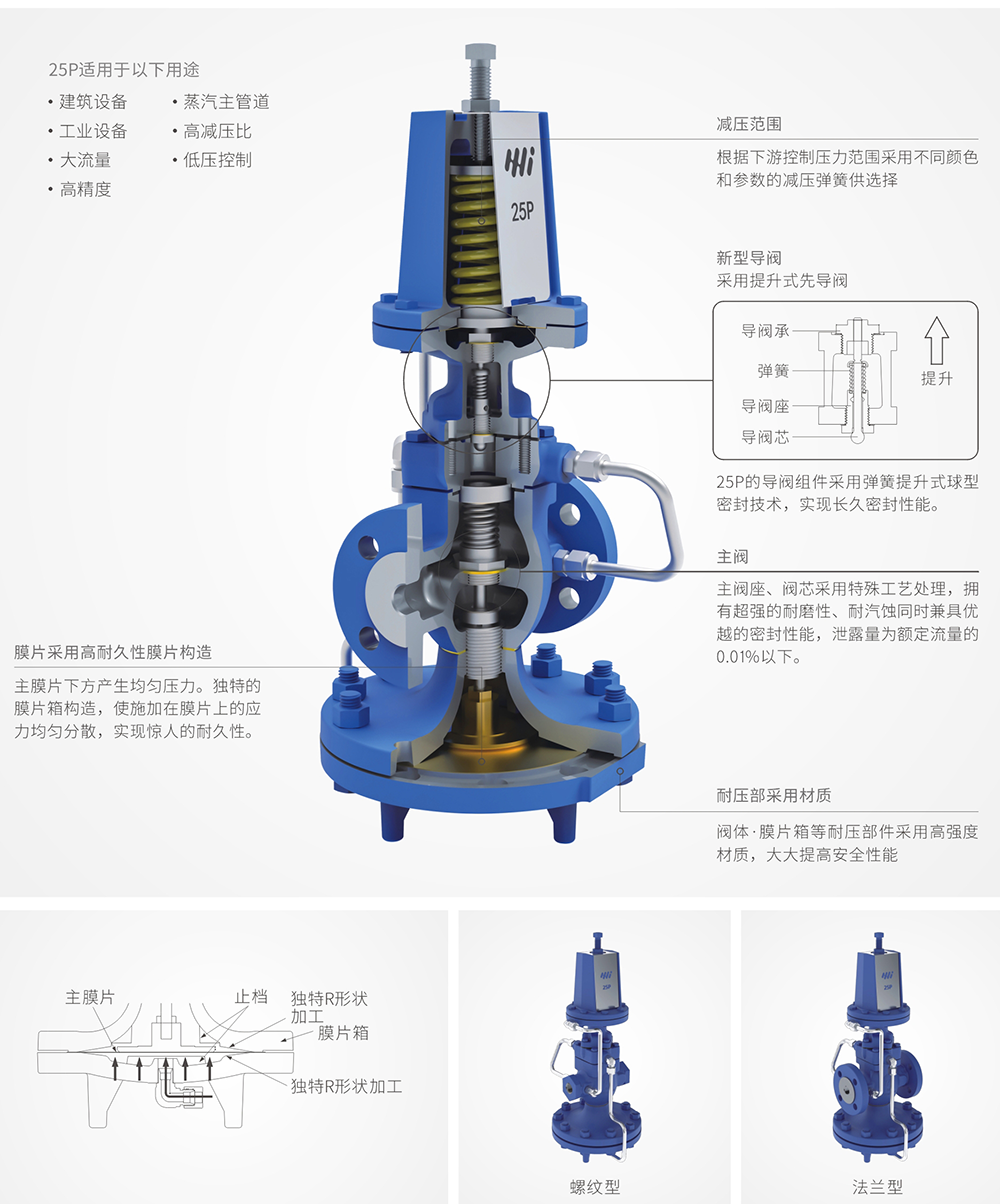
● Built-in double-layer stainless steel filter screen effectively reduces the impact of foreign objects in the pipeline on the performance of the pressure reducing valve.
● Pressure reducing valve control pipe, with a special structural design to ensure precise control.
● Utilizes high-quality springs to ensure they maintain their elasticity even after prolonged use, enabling pressure control.
The 25P pressure reducing valve uses a main diaphragm with a large pressure-bearing area, which can sense minute changes in secondary side pressure. It integrates excellent performance such as low-pressure control, large flow rate, and stable control, which are difficult to control with self-operated pressure reducing valves.
Working principle
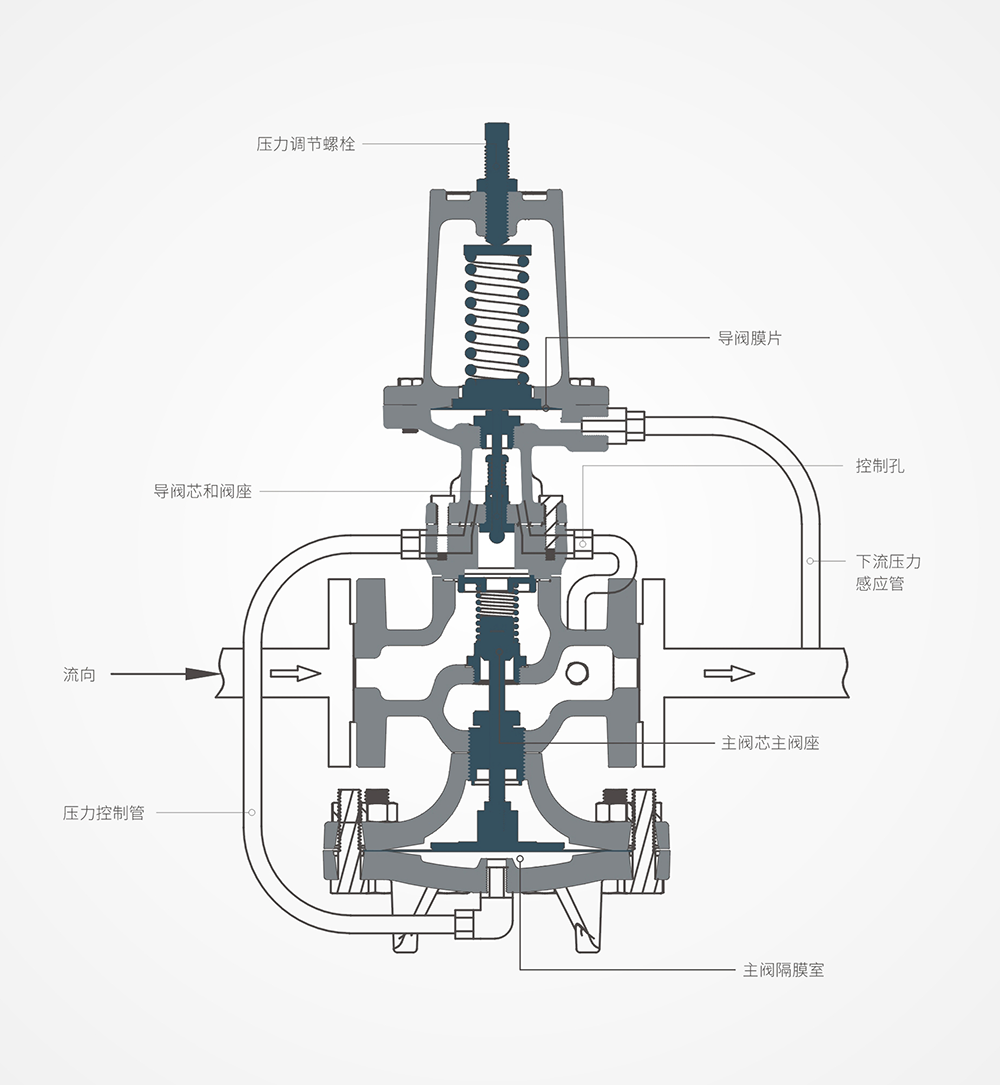
Before startup, the normal position is with the main valve closed and the pilot valve open by spring force. Steam enters the main diaphragm chamber through the pilot valve, while some steam flows out through the control orifice. When the steam flowing into the pilot valve is greater than the steam flowing out through the control orifice, the control pressure in the main diaphragm chamber increases, opening the main valve.
As steam flows through the main valve, the increase in downstream pressure is fed back through the sensing tube to the lower part of the pilot valve diaphragm. This force balances the spring compression force on the upper part of the diaphragm, causing the pilot valve to gradually close and throttle, thereby maintaining the pressure in the main diaphragm chamber and controlling the opening of the main valve to deliver an appropriate amount of steam. Adjusting the spring on the pilot valve diaphragm changes the downstream set pressure. When steam is not needed, the pressure in the sensing tube increases, closing the pilot valve, and the control pressure is released through the control orifice, causing the main valve to close tightly.